
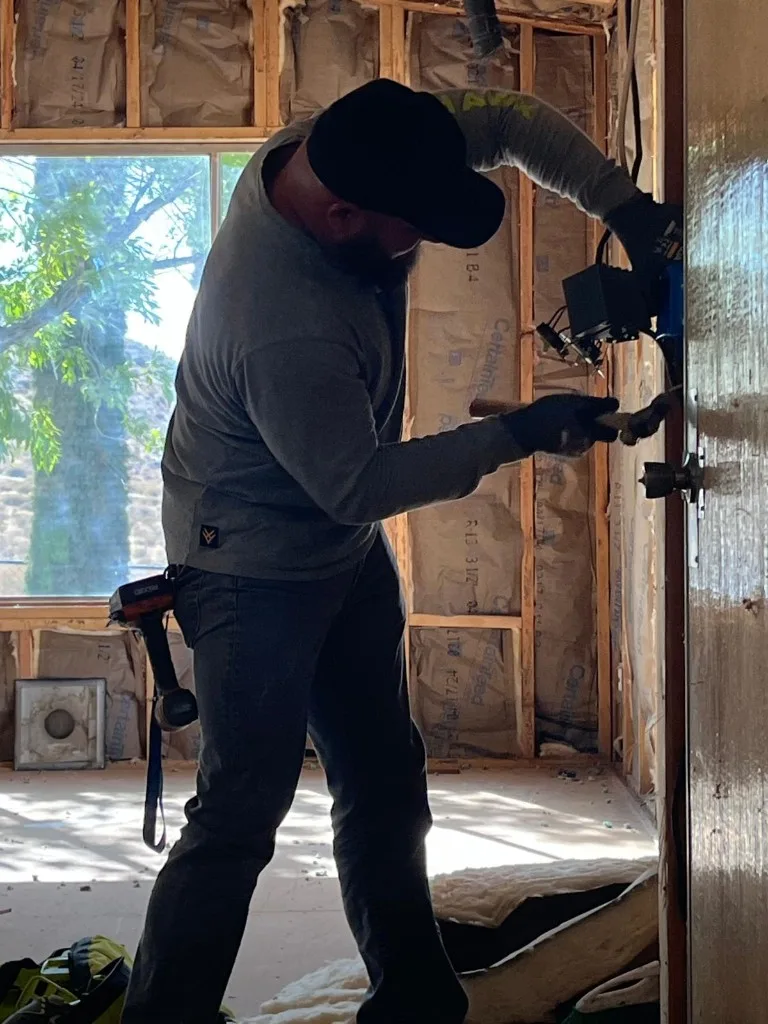

A doorbell runs on low voltage from a small transformer, usually tucked in the garage, attic, near the panel, or inside the chime box. When any part of that loop fails, the bell goes quiet or acts strange.
Video doorbells made this more common. Many older transformers do not put out enough power for a camera doorbell, so the device reboots, drops Wi-Fi, or never fully charges. We fix the cause instead of just swapping parts.
Common doorbell problems we fix
Here is what we see most often on doorbell calls:
- No sound at all when the button is pressed
- A chime that hums, buzzes, or rings on its own
- A video doorbell that reboots, goes offline, or shows low power
- Broken or corroded wire at the button after years of sun and weather
- A transformer that is dead, undersized, or impossible to find
How we track it down
We test the button, the chime, and the transformer with a meter so we know exactly which piece failed. If the wire inside the wall is broken, we repair or replace it with as little wall damage as we can.
For video doorbells, we check the transformer output against what your doorbell maker asks for. If it is too weak, we install a properly sized transformer and make the connections safely at the line voltage side.
Why this is electrician work
The doorbell wire itself is low voltage, but the transformer connects to standard house power. A transformer mounted loose or spliced outside a box is a common find. We make sure the high voltage side is in an approved box and protected properly.
Pair it with other small jobs
Doorbell repairs are quick, so many customers add a few other items to the same visit, like a porch light, an outdoor outlet, or a switch that has been acting up. Make a list and we will work through it.