
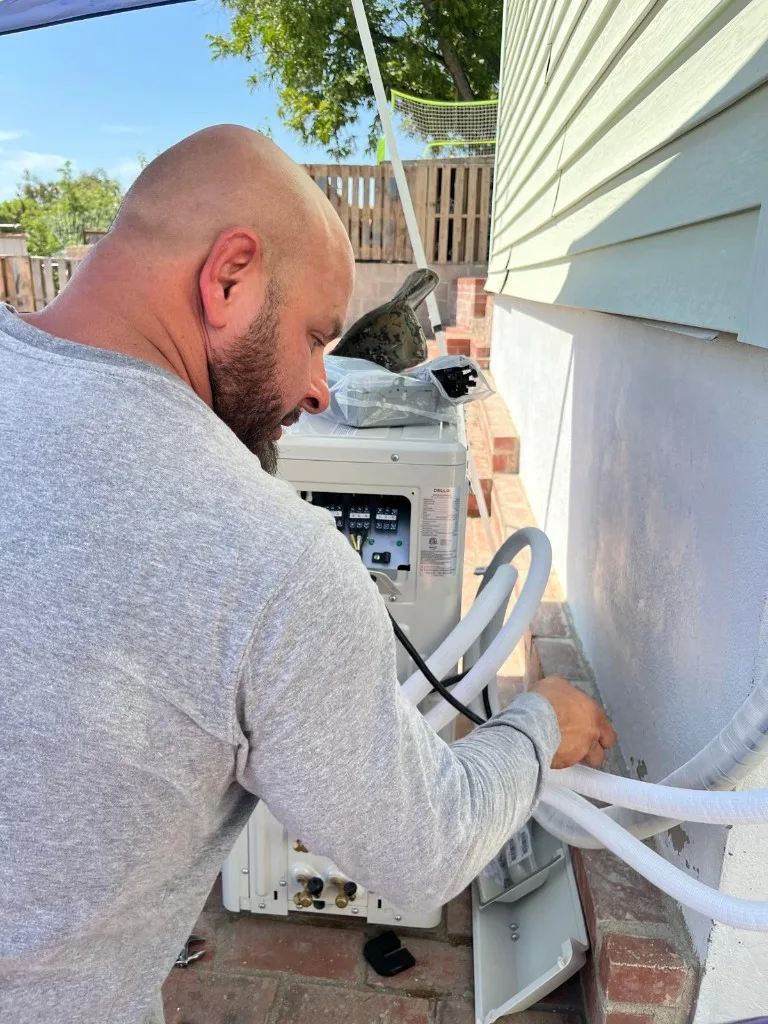

Bakersfield summers put more load on a home electrical system than any other time of year. When the AC starts, it pulls a big burst of power for a moment. A healthy system handles that without a problem. When the breaker trips or the lights dip hard, it is telling you something.
Guides: breaker trips when the AC kicks on, lights dim when the AC starts, and breaker replacement.
Our licensed electricians check the AC circuit, the breaker, the connections at the disconnect and condenser, and the panel itself. Then we explain what we found in plain words and give you options before any work starts.
Common causes we find
A few problems show up again and again on summer calls:
- A worn or wrong size breaker on the AC circuit
- Loose or burned connections at the panel, the outdoor disconnect, or the condenser
- Wire that is too small for the equipment that was installed later
- An older or crowded panel that is close to its limit when the AC, dryer, and kitchen run together
- A problem on the service side, such as a loose neutral, which can cause lights to brighten and dim
A quick, brief dim is often normal. Some signs are not.
A light that flickers for a split second as the compressor starts can be normal. Lights that dim a lot, stay dim, or brighten while others dim point to a wiring or service problem that needs a look soon.
If the breaker feels hot, buzzes, smells burnt, or trips right away when you reset it, stop resetting it and call. Those are signs of heat at a connection, and we treat them as urgent.
What we do not do
We do not just put in a bigger breaker. A breaker is sized to protect the wire, so oversizing it hides the problem and creates a fire risk. We fix the connection, the circuit, or the panel so the breaker that belongs there can do its job.
If the AC unit itself has a failing part, we will tell you so you can bring in your HVAC company. We handle the electrical side.
When the panel or service is the bottleneck
If the house has added AC tonnage, a pool pump, an EV charger, or a shop over the years, the panel may simply be out of room. In that case we walk you through a load check and options such as a dedicated circuit, a subpanel, or a panel upgrade, including permits and PG&E coordination when the job calls for it.