
Quick answer on recessed vs flush mount lights
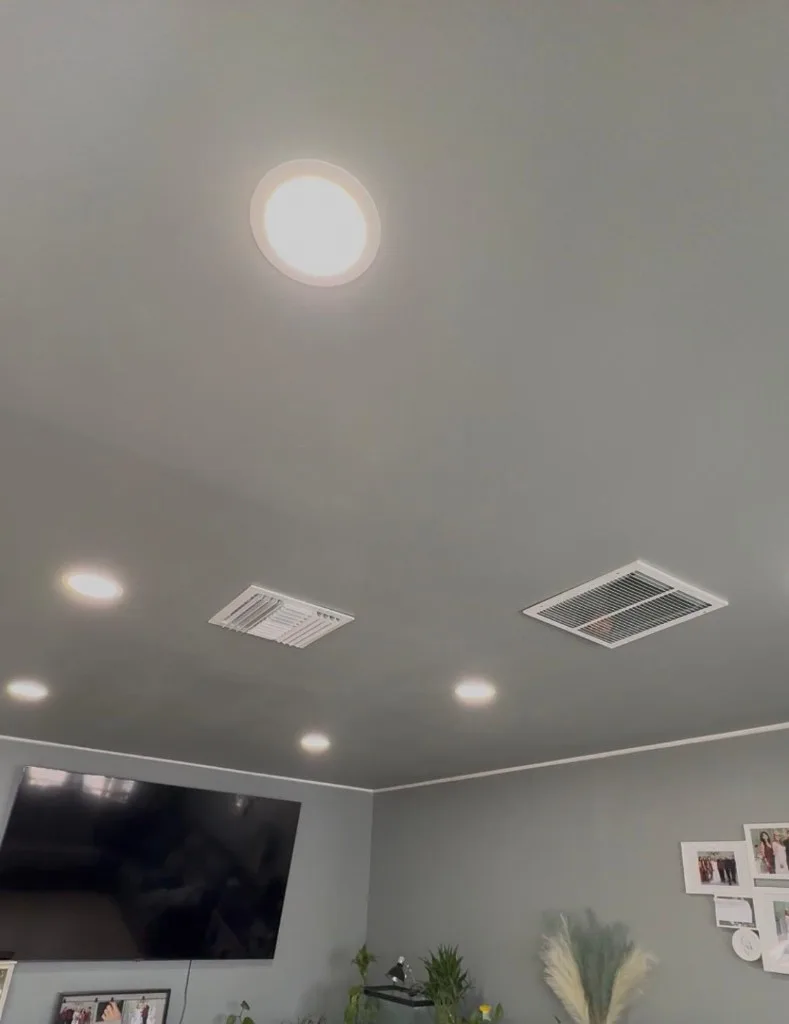
Recessed cans give clean ceilings and even, broad light—great for kitchens, hallways, and living rooms. Flush mounts and pendants add character, fill the room with personality, and are usually cheaper to install. Most rooms benefit from a mix: cans for ambient light, a pendant or chandelier for a focal point.
Key facts about recessed vs flush mount lights
- Recessed cans: clean look, even lighting, more invasive install.
- Flush/pendant fixtures: character, statement, simpler install on existing boxes.
- For low ceilings, flush mounts are usually better than pendants. For high ceilings, the opposite.
When recessed cans win
Recessed cans disappear into the ceiling, which is exactly the point. In a kitchen, you can light the counters and the floor evenly with a grid of cans and end up with no shadows on prep surfaces. In a hallway, three or four cans down the middle keep things bright without anything hanging in the way.
They’re also great for low-ceiling rooms (8 ft or under) where a pendant would feel intrusive.
When flush mounts and pendants win
Decorative spaces—dining rooms, foyers, bedrooms—usually benefit from a fixture you actually see. Pendants and chandeliers add personality. A simple semi-flush mount in a small bedroom feels intentional in a way recessed cans don’t.
They’re also cheaper to install: you’re typically swapping a fixture on an existing box, no ceiling cuts, no wire fishing.
The real answer: usually both
Most well-lit rooms use a mix. Kitchen: cans for ambient + pendants over an island or sink. Living room: cans + a statement fixture. Dining: chandelier + a couple of accent cans. We help you map it before we cut a single hole.
Recessed vs flush mount at a glance
Both work; the right answer depends on the room and the look.
| Feature | Recessed cans | Flush mount / pendant |
|---|---|---|
| Look | Clean, minimal ceiling | Decorative; statement piece |
| Light spread | Broad and even (multiple cans) | Concentrated under fixture |
| Install difficulty | Higher—ceiling cuts, wire fishing | Lower—usually swap on existing box |
| Best for | Kitchens, halls, large rooms | Dining, bedrooms, decorative spaces |
| Ceiling height | Any | Pendants need 8 ft+ for clearance |
Bakersfield services for recessed vs flush mount lights
If this sounds like what you are dealing with, these service pages explain the next step.
Recessed vs flush mount lights FAQs
How many recessed cans do I need in a kitchen?
A common rule is one can per 4–6 feet of ceiling. A 12x12 kitchen often needs 4–6 cans for even coverage.
Can recessed cans go in an existing ceiling?
Yes—we cut clean holes, fish wire, and install retrofit cans. Most rooms can be done in a single visit.
Do recessed cans give enough light alone?
For ambient light, yes—if there are enough of them. For task lighting (kitchen counters, reading nooks) you may want under-cabinet or a focused fixture too.
Is a chandelier OK on an 8-foot ceiling?
Mini-chandeliers and semi-flush mounts work. Anything that hangs more than 12 inches will feel cramped.
Talk to a Bakersfield electrician about recessed vs flush mount lights
Call (661) 293-0213 or use the contact form.