

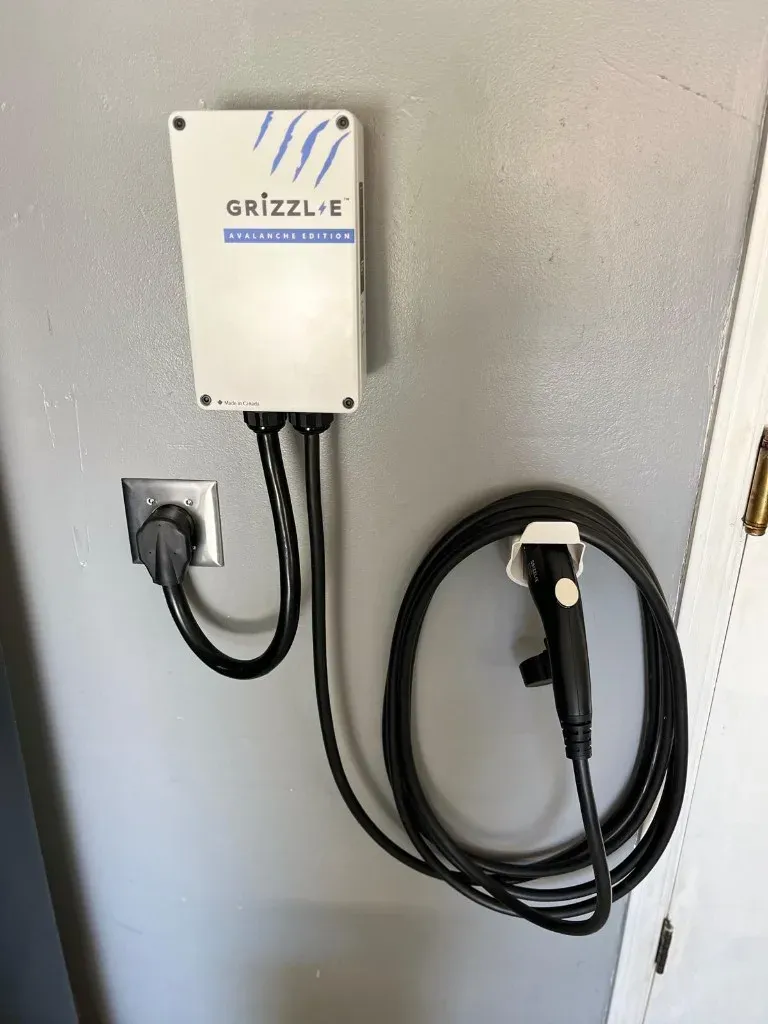
What Are You Paying For?
The electrical work: a dedicated 240V circuit from your panel to the charger, with the right breaker, wire and conduit, plus mounting, the permit and a test.
The charger is separate. Many people buy their own, such as a Tesla Wall Connector, ChargePoint or Grizzl-E, and have it installed.
What Makes the Price Go Up or Down?
A charger on the garage wall right next to a panel with spare room sits near the low end of $500 to $2,000+. Each of these moves it up:
- A full or undersized panel that needs load management, a subpanel or an upgrade
- A long run from the panel to a driveway or detached garage
- Trenching for an outdoor or detached location
- Finished walls that need fishing wire and patching
- A higher-power charger that needs a larger circuit
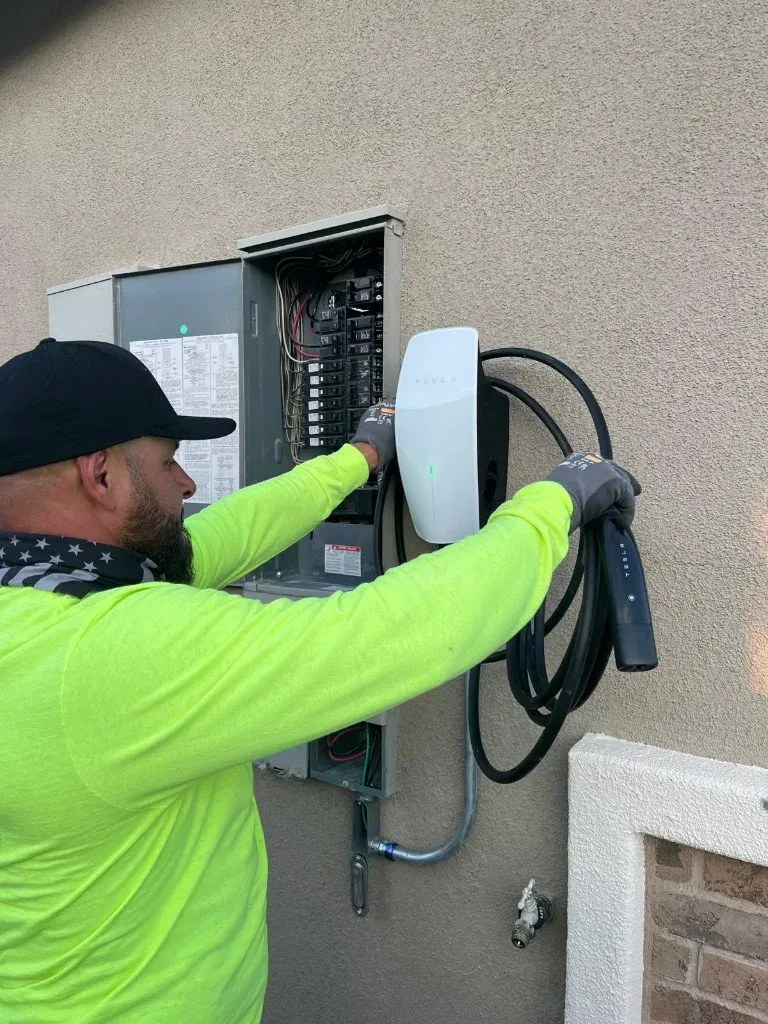
Do You Need a Permit in Bakersfield?
Usually yes. A new 240V circuit needs a permit from the City of Bakersfield inside city limits or Kern County outside them.
A licensed contractor pulls it and books the inspection. Skipping it can cause trouble with insurance or when you sell. See Bakersfield and Kern County permits.
How Do PG&E Rates Affect Charging Cost?
PG&E time-of-use plans make late-night power cheaper, so most owners schedule charging overnight in the charger app.
Ask PG&E which EV rate plan fits your home. The installer can help set the schedule.
Is Level 1 Enough?
For short commutes, sometimes. A regular 120V outlet adds only a few miles of range per hour, so most drivers who use the car daily end up wanting Level 2.
See Level 1 vs Level 2.
“I couldn’t be happier with my EV charger installation experience. From the first call, everything was smooth, fast, and professional. The price was excellent, and they had me scheduled just 4 days after I reached out…”