Quick answer
The short answer
A dedicated circuit means one outlet on its own breaker—nothing else shares it. You need one for any appliance that draws over 12 amps continuously: window AC, space heaters, microwaves, refrigerators, freezers, garage tools, sump pumps, and most large kitchen appliances. If you keep tripping a breaker, the answer is almost always a new dedicated circuit—not a bigger breaker.
What to know first
- Dedicated circuits are required by code for many appliances and recommended for any high-draw device.
- The give-away signs you need one: tripping breakers, lights dimming when an appliance starts, or warm outlets.
- A dedicated circuit isn’t just a "nice to have"—it’s often the difference between a safe install and a fire risk.
What "dedicated" actually means
A dedicated circuit is a single branch circuit that serves only one outlet (and therefore one appliance). It has its own breaker in the panel and its own wire run all the way out. Nothing else taps it.
The point is reliability and safety. A high-draw appliance gets clean power, the circuit isn’t fighting other devices, and a fault on the appliance trips that one breaker—not a whole zone of the house.
Appliances that need their own circuit
Code-required: kitchen "small appliance" outlets (at least two 20-amp circuits per kitchen), microwave (typically dedicated), dishwasher, garbage disposal, refrigerator, washer, electric dryer (240V), electric range/oven (240V), water heater (electric), HVAC equipment, sump pumps, EV chargers, and bathroom outlets (20-amp dedicated).
Recommended even when not strictly required: window AC, space heaters, freezers (especially in garages), workshop tools, and home offices with multiple monitors and equipment. Anything that pulls 12+ amps continuously is a candidate.
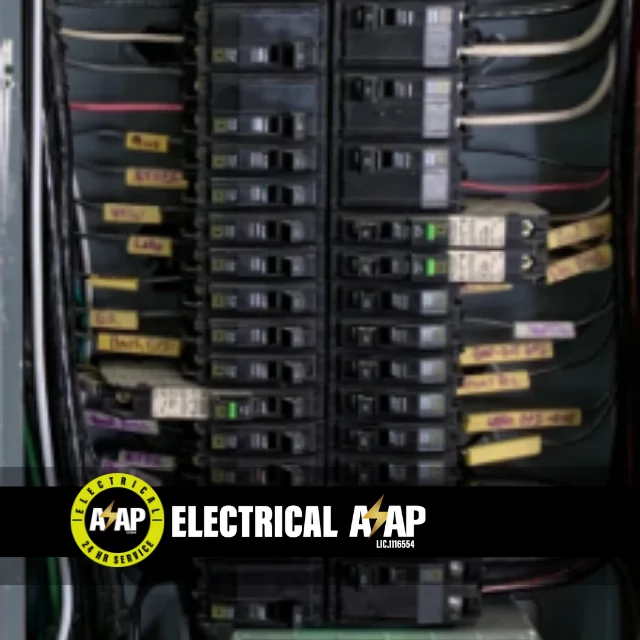
Telltale signs you need one
The classic giveaway is a breaker that trips when two appliances run together. Microwave + toaster on the same kitchen circuit. Space heater + hair dryer on the same bathroom circuit. Garage freezer + shop vac on a shared garage outlet. The breaker is doing its job—the circuit just wasn’t built for the load.
Other signs: lights dimming when a big appliance kicks on (motor inrush), warm outlets, or that one outlet that feels loose when you plug something in. All of these point to circuit overload or shared-circuit stress.
What a dedicated circuit install actually involves
We start at the panel. There has to be space (a free slot or a tandem-compatible spot) and capacity (the service overall isn’t already maxed). Then we run the right gauge wire from the panel to the new outlet location—through the attic, walls, or crawl space depending on the house.
For most homes in Bakersfield, a dedicated 20-amp circuit to a single outlet is a same-day job. Longer runs, finished walls that need patching, or panel-side issues (full panel, undersized service) can extend that, and we’ll tell you up front before any work starts.
Shared vs dedicated circuit
Most homes have a mix of both. The question is which side a given outlet should be on.
| Factor | Shared circuit | Dedicated circuit |
|---|---|---|
| What’s on it | Multiple outlets and lights | One outlet, one appliance |
| Cost to install | Already there—free | New wire, breaker, and panel space |
| Best for | Lamps, phones, low-draw electronics | Appliances over 12 amps continuous |
| Required by code for | — | Kitchen small appliance, microwave, fridge, AC, sump pump, EV charger, etc. |
| Why it matters | Trips when overloaded | Reliable power, no nuisance trips |
Related next steps
If this sounds like what you are dealing with, these service pages explain the next step.
Frequently asked questions
Do I really need a dedicated circuit for my microwave?
Yes—NEC requires it. Microwaves draw 12–15 amps continuously, which is too much to share with other kitchen outlets. If yours trips when you run other devices, that’s why.
Can I just put a bigger breaker in instead?
No. The wire size has to match the breaker. Putting a 20-amp breaker on 14-gauge wire doesn’t give you more capacity—it lets the wire overheat inside the wall before the breaker trips.
How much does a dedicated circuit cost in Bakersfield?
Most basic dedicated 20-amp circuits run $400–$900 depending on wire run length, wall finish, and panel access. Longer runs through finished walls add patch & paint labor.
What if my panel is full?
Sometimes we can use tandem breakers (two on one slot) if your panel allows. If not, a sub-panel or panel upgrade is the next step. We confirm before we quote.
Work with our team
Call (661) 293-0213 or use the contact form.